AI Tools for Email Marketing Content: Boost Engagement with Smart Automation
 Thu Nghiem
Discover how AI tools for email marketing content can automate repetitive tasks, enhance personalization, and drive higher open and click rates—without sacrificing your brand voice. Learn about top tools, practical use cases, and how to choose the right solution for your needs.
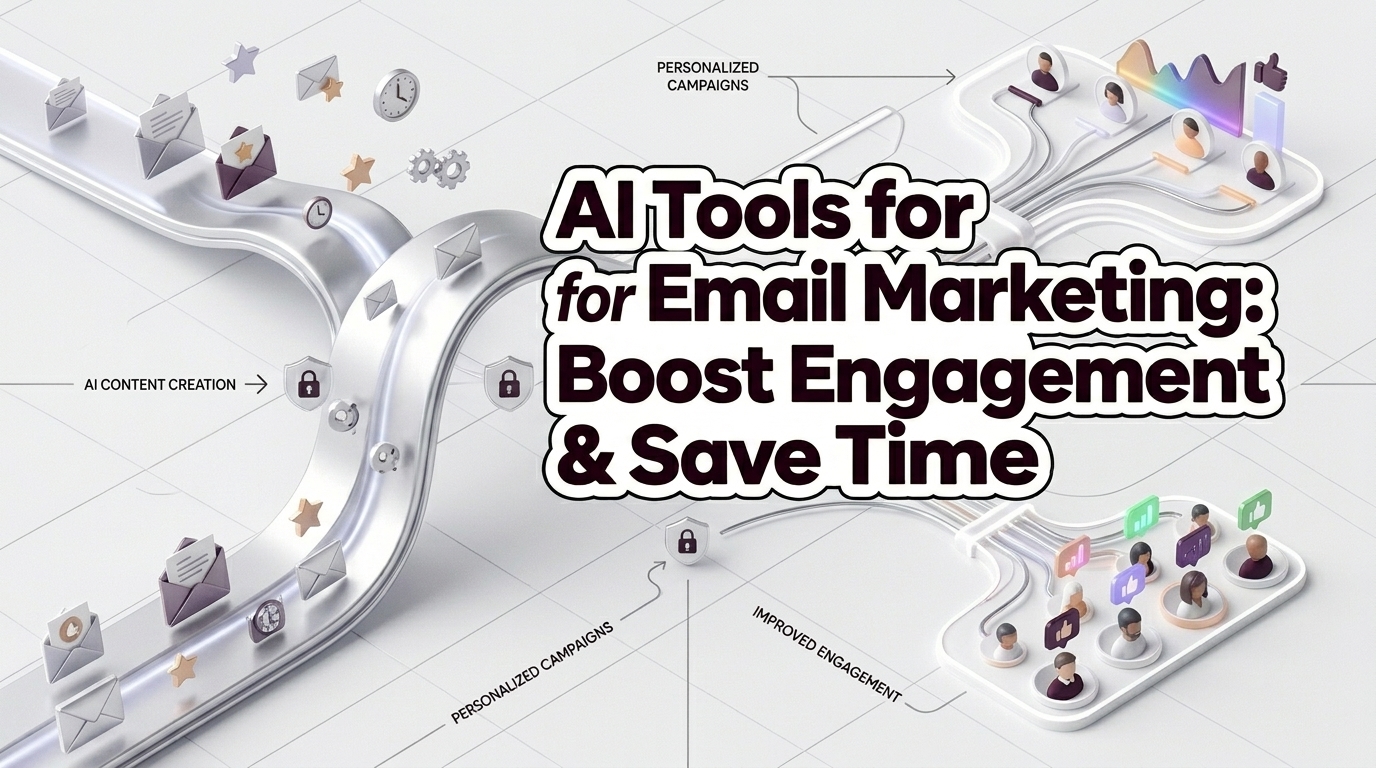
Email marketing remains one of the most effective channels for driving conversions—delivering an average ROI of $36 for every $1 spent. Yet, marketers still spend 10+ hours each week crafting subject lines, segmenting lists, and tweaking copy. What if you could reclaim half that time while improving engagement?
AI tools for email marketing content are no longer a futuristic concept. They’re here, they’re affordable, and they’re transforming how teams of all sizes create, personalize, and optimize campaigns. The best part? You don’t need a data science degree to use them.
This guide will show you how AI can automate repetitive tasks, enhance personalization, and drive higher open and click rates—without sacrificing your brand voice. We’ll cover the top tools, practical use cases, and a step-by-step framework to help you choose the right solution for your needs.
Why AI is Changing Email Marketing
Email marketing is a numbers game. The average office worker receives 121 emails per day, and 47% of recipients decide whether to open an email based on the subject line alone. AI doesn’t just help you keep up—it helps you stand out.
What AI Actually Does for Email Marketing
AI tools for email marketing content focus on three core areas:
- Automation: Handling repetitive tasks like drafting subject lines, segmenting lists, or scheduling sends.
- Personalization: Tailoring content to individual subscribers based on behavior, preferences, or past interactions.
- Optimization: Predicting the best send times, A/B testing variations, and analyzing performance to improve future campaigns.
Common Misconceptions
Despite its growing adoption, AI in email marketing is still misunderstood. Here’s what it isn’t:
- A replacement for creativity: AI generates ideas, but human oversight ensures brand consistency and emotional resonance.
- Only for enterprise: Affordable, user-friendly tools exist for solopreneurs, small businesses, and agencies.
- A magic bullet: AI improves efficiency, but it won’t fix a flawed strategy or poor-quality data.
The reality? AI is a force multiplier. It handles the heavy lifting so you can focus on strategy, storytelling, and building relationships with your audience.
How AI Enhances Email Marketing Content
AI tools for email marketing content solve specific pain points—whether you’re struggling with low open rates, time-consuming copywriting, or inconsistent messaging. Here’s how they work in practice:
Core Use Cases
| Use Case | Example | Benefit |
|---|---|---|
| Subject line generation | Tools like Phrasee or Copy.ai generate 100+ A/B test variants in seconds | Higher open rates with minimal effort |
| Dynamic personalization | AI inserts product recommendations based on past purchases or browsing | Increased relevance and conversions |
| Automated copywriting | Jasper or Rytr drafts email body text from bullet points or prompts | Faster campaign creation |
| Send-time optimization | Seventh Sense predicts the best time to send to each subscriber | Improved deliverability and engagement |
| Performance analytics | AI flags underperforming segments or content gaps | Data-driven decision-making |
Benefits of AI in Email Marketing
- Time savings: Reduce hours spent on manual tasks like drafting, testing, and analyzing.
- Higher engagement: Personalized, optimized content leads to better open and click rates.
- Reduced unsubscribe rates: Relevant content keeps subscribers engaged and less likely to opt out.
- Scalability: Handle larger lists and more frequent campaigns without adding headcount.
Limitations to Keep in Mind
AI isn’t perfect. It excels at pattern recognition and automation but still requires human input for:
- Tone and brand voice: AI-generated copy may sound generic without refinement.
- Strategy: AI can’t replace your understanding of your audience or business goals.
- Ethics: Avoid over-personalization or manipulative tactics that erode trust.
Top AI Tools for Email Marketing Content
The right tool depends on your needs, budget, and technical expertise. Below, we’ve grouped the top AI tools for email marketing content into four categories, with key features and use cases for each.
1. All-in-One Platforms
These tools integrate AI into broader email marketing platforms, offering built-in features for automation, segmentation, and analytics.
| Tool | Key Features | Best For | Pricing Tier | Pros & Cons |
|---|---|---|---|---|
| HubSpot | AI-powered subject line generator, predictive lead scoring, and send-time optimization | Small to mid-sized businesses | Free plan; paid starts at $45/month | Pros: Easy to use, strong integrations. Cons: Limited advanced AI features in lower tiers. |
| Klaviyo | AI-driven product recommendations, dynamic content blocks, and predictive analytics | E-commerce brands | Free plan; paid starts at $20/month | Pros: Strong personalization for Shopify/WooCommerce. Cons: Steeper learning curve. |
| ActiveCampaign | AI for automation workflows, predictive sending, and content generation | Mid-sized businesses and agencies | Paid starts at $29/month | Pros: Powerful automation. Cons: AI features require higher-tier plans. |
2. Specialized AI Writers
These tools focus on generating high-quality email copy, from subject lines to body text and CTAs.
| Tool | Key Features | Best For | Pricing Tier | Pros & Cons |
|---|---|---|---|---|
| Copy.ai | Generates subject lines, email body copy, and CTAs from prompts | Solopreneurs, content teams | Free plan; paid starts at $36/month | Pros: Beginner-friendly, fast output. Cons: Limited customization for brand voice. |
| Jasper | AI copywriting for emails, blog posts, and ads with brand voice training | Agencies, mid-sized businesses | Paid starts at $49/month | Pros: Strong brand voice control. Cons: Higher cost for advanced features. |
| Rytr | Affordable AI writing for subject lines, newsletters, and follow-ups | Budget-conscious marketers | Free plan; paid starts at $9/month | Pros: Low cost, simple interface. Cons: Less polished output than premium tools. |
3. Personalization Engines
These tools optimize language and messaging to maximize conversions.
| Tool | Key Features | Best For | Pricing Tier | Pros & Cons |
|---|---|---|---|---|
| Persado | AI-driven language optimization for emotional resonance and conversions | Enterprise, large e-commerce | Custom pricing | Pros: Data-backed language improvements. Cons: Expensive, complex setup. |
| Phrasee | AI generates and A/B tests subject lines, CTAs, and body copy | Mid-sized to enterprise | Custom pricing | Pros: Strong focus on email performance. Cons: Requires integration with ESP. |
4. Analytics & Optimization Tools
These tools use AI to analyze performance and optimize send times, content, and segmentation.
| Tool | Key Features | Best For | Pricing Tier | Pros & Cons |
|---|---|---|---|---|
| Seventh Sense | AI predicts the best send time for each subscriber | B2B marketers, high-volume senders | Starts at $50/month | Pros: Improves deliverability. Cons: Requires HubSpot or Marketo integration. |
| Optimail | AI optimizes send times, subject lines, and content in real time | Mid-sized businesses | Starts at $99/month | Pros: Real-time adjustments. Cons: Limited free trial. |
How to Choose the Right AI Tool for Your Needs
With so many options, how do you pick the right AI tool for email marketing content? Follow this step-by-step framework to narrow down your choices:
1. Identify Your Pain Points
Start by pinpointing where your email marketing process is breaking down. Common challenges include:
- Low open rates: Your subject lines aren’t resonating with subscribers.
- Time-consuming copywriting: Drafting emails takes too long.
- Poor segmentation: Your list isn’t segmented effectively, leading to irrelevant content.
- Inconsistent performance: You’re not sure what’s working and what’s not.
2. Match Needs to Tool Type
Once you’ve identified your pain points, match them to the right category of tool:
- Need better subject lines? Try Phrasee, Copy.ai, or Jasper.
- Struggling with personalization? Look at Klaviyo, ActiveCampaign, or Persado.
- Want to optimize send times? Seventh Sense or Optimail can help.
- Need end-to-end automation? HubSpot or ActiveCampaign may be the best fit.
3. Consider Integrations
Does the tool integrate with your existing tech stack? For example:
- If you use Shopify, Klaviyo’s AI features are a natural fit.
- If you’re on HubSpot, Seventh Sense or HubSpot’s built-in AI tools may be the easiest to implement.
- If you rely on a custom ESP, check for API access or Zapier integrations.
4. Test with Free Trials
Most AI tools for email marketing content offer free trials or freemium plans. Take advantage of these to:
- Test the tool’s ease of use.
- Evaluate the quality of AI-generated output.
- Check for compatibility with your workflow.
5. Start Small
Don’t overhaul your entire email marketing process at once. Instead:
- Phase 1: Automate subject line generation for your next campaign.
- Phase 2: Use AI to draft body copy for a single email series.
- Phase 3: Expand to dynamic personalization or send-time optimization.
Red Flags to Watch For
Not all AI tools are created equal. Avoid tools that:
- Overpromise results: No tool can guarantee a 100% open rate or instant ROI.
- Lack transparency: If a tool doesn’t explain how its AI works, it’s likely a black box.
- Don’t offer human oversight: AI should augment your work, not replace it entirely.
Getting Started with AI in Email Marketing
Ready to dip your toes into AI-powered email marketing? Here’s how to get started with quick wins and long-term strategies.
Quick Wins for Immediate Impact
- Generate subject line options: Use a tool like Copy.ai or Phrasee to create 5–10 subject line variations for your next campaign. A/B test them to see which performs best.
- Automate a welcome series: Use an all-in-one platform like Klaviyo or HubSpot to set up a dynamic welcome email series that personalizes content based on subscriber behavior.
- Optimize send times: Try Seventh Sense or Optimail to predict the best time to send emails to each subscriber.
- A/B test AI vs. human copy: Draft an email using AI-generated copy, then compare its performance to a human-written version.
Long-Term Strategy
- Combine AI with human creativity: Use AI to generate drafts, then refine them to match your brand voice. For example, Jasper’s brand voice training can help the tool mimic your style over time.
- Monitor performance metrics: Track key metrics like open rates, click rates, and unsubscribe rates before and after implementing AI. Use this data to refine your approach.
- Stay updated on AI trends: AI in email marketing is evolving rapidly. Keep an eye on advancements like:
- Hyper-personalization: AI that tailors content in real time based on subscriber behavior.
- Generative design: Tools that create visuals or layouts for emails.
- Predictive analytics: AI that forecasts subscriber actions, like churn or purchase intent.
Resources to Explore
- Tool demos: Many AI tools offer free demos or walkthroughs. Check out HubSpot’s AI features or Jasper’s video tutorials.
- Free templates: Tools like Copy.ai and Rytr provide templates for newsletters, promotional emails, and follow-ups.
- Courses: HubSpot Academy offers free courses on email marketing and AI tools.
The Future of AI in Email Marketing
AI is transforming email marketing from a manual, time-consuming process into a data-driven, scalable strategy. But it’s not a replacement for human creativity or strategy—it’s a tool to help you work smarter.
The future of AI in email marketing will likely include:
- Real-time content adjustments: AI that tweaks email content on the fly based on subscriber behavior.
- Voice and tone adaptation: Tools that adjust messaging to match cultural or regional preferences.
- Seamless integrations: AI that works across your entire marketing stack, from CRM to social media.
Your Next Steps
Ready to get started? Here’s what to do next:
- Pick one tool: Choose a tool from this list that aligns with your pain points (e.g., subject line generation or personalization).
- Sign up for a free trial: Test the tool with a small campaign or email series.
- Measure results: Track performance metrics before and after using AI to see the impact.
- Scale gradually: Once you’re comfortable, expand to other use cases like dynamic content or send-time optimization.
AI tools for email marketing content aren’t just for enterprise teams. They’re for anyone looking to save time, improve engagement, and drive better results—without adding complexity. Start small, experiment, and let AI handle the heavy lifting. Your subscribers (and your inbox) will thank you.