Backlink Competitor Analysis: How to Uncover and Capitalize on Your Rivals' Link Strategies
 Thu Nghiem
Learn how to perform a backlink competitor analysis to uncover your rivals' link-building strategies, identify high-quality backlink opportunities, and build a stronger, more relevant link profile for your site.
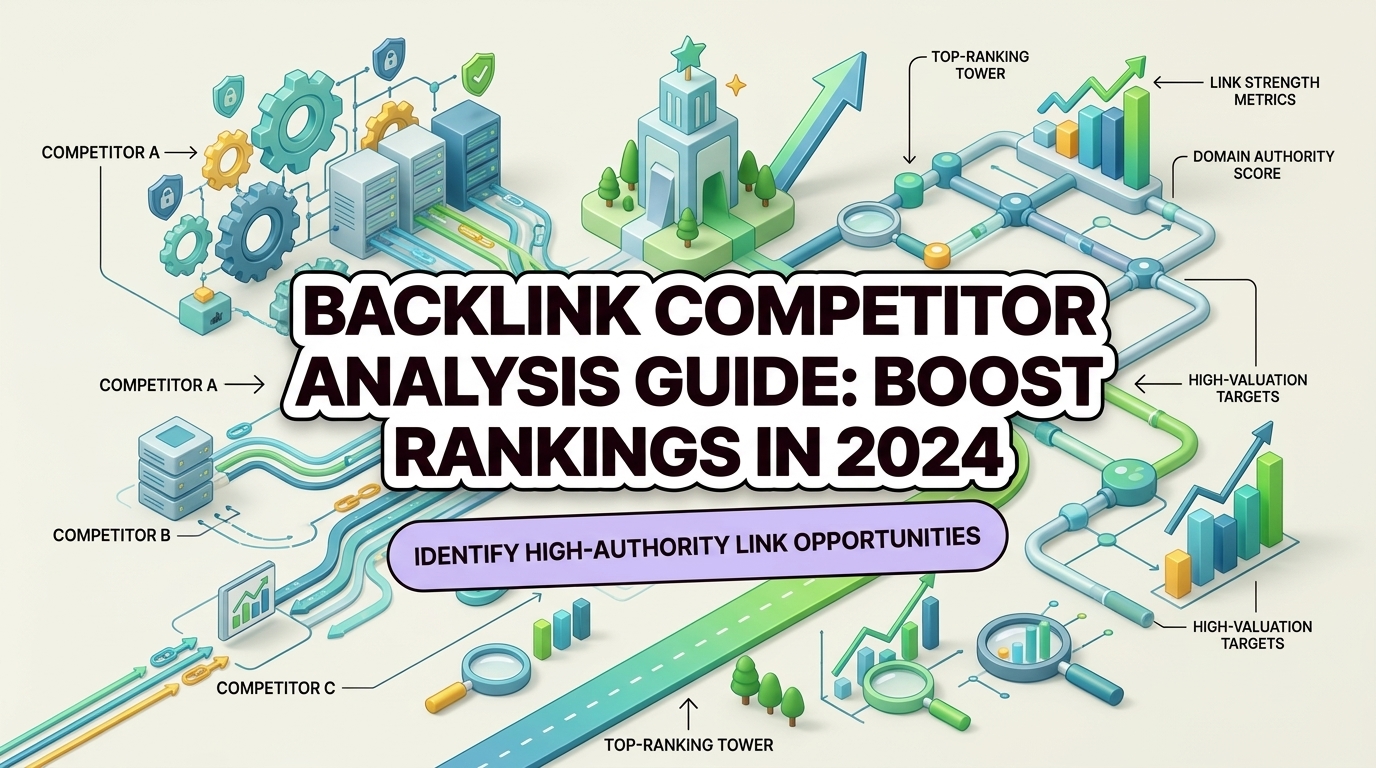
If your website isn’t climbing the search rankings as fast as you’d like, the problem might not be your content—it could be your backlink profile. A strong backlink profile acts like a vote of confidence from other sites, telling search engines your content is valuable and trustworthy. But here’s the catch: your competitors are likely building backlinks too, and if you’re not analyzing their strategies, you’re leaving opportunities—and rankings—on the table.
Backlink competitor analysis isn’t about copying what your rivals do. It’s about uncovering gaps in their link strategies, understanding what types of content attract quality backlinks, and building a smarter, more relevant link profile for your own site. When done right, it can help you close the authority gap, outrank competitors, and attract more organic traffic.
This guide walks you through a complete backlink competitor analysis—from identifying the right competitors to turning their link data into an actionable link-building plan. You’ll learn which tools to use, what to look for in competitor backlinks, and how to build a stronger profile without resorting to spammy tactics.
What Is Backlink Competitor Analysis and Why It Matters
Backlink competitor analysis is the process of examining the backlink profiles of your top-ranking competitors to identify link-building opportunities, understand their strategies, and build a stronger profile for your own site. It’s a core part of modern SEO because backlinks remain one of the top ranking factors in Google’s algorithm.
A strong backlink profile does more than boost rankings—it enhances domain authority, increases referral traffic, and strengthens your site’s credibility in your niche. But building a high-quality backlink profile from scratch is difficult and time-consuming. That’s where competitor analysis comes in. Instead of guessing which sites might link to you, you can reverse-engineer the link-building success of competitors who are already ranking well.
Why it works:
- You see which high-authority sites already link to competitors in your space.
- You identify content types that naturally attract backlinks.
- You spot gaps in your own profile compared to competitors.
Common beginner mistakes to avoid:
- Copying irrelevant links (e.g., links from unrelated niches or low-quality directories).
- Ignoring the quality of the linking domain in favor of quantity.
- Focusing only on direct competitors and missing aspirational ones with stronger profiles.
- Assuming all backlinks are equal—context and relevance matter far more than raw numbers.
By treating backlink analysis as a strategic exercise—not a mechanical one—you’ll build a link profile that’s not just bigger, but better aligned with your audience and long-term goals.
How to Identify Your True SEO Competitors
Not all competitors in your space are true SEO competitors. Your business might compete with a dozen local brands, but only a handful are actually ranking for the keywords you want. These are your SEO competitors—the sites appearing on page one of Google for your target queries. They’re the ones whose backlink strategies directly impact your ability to rank.
To find them, start with a simple search. Type your primary keyword into Google and note the top 10–15 results. These are your initial SEO competitors. But don’t stop there.
Use tools to refine your list:
- Google Search Console: Check which domains are ranking for your top keywords.
- Ahrefs or SEMrush: Enter your domain to see which sites share your keyword rankings.
- SERP analysis tools: Use features like "Competing Domains" or "SERP Overview" to see overlapping competitors.
Look for a mix of competitors:
- Direct competitors: Sites offering similar products or services.
- Aspirational competitors: Sites ranking higher than you, regardless of direct competition.
- Content competitors: Sites that rank for informational queries related to your industry.
For example, if you sell organic skincare products, your direct competitor might be another skincare brand. But an aspirational competitor could be a well-known beauty blog or a major e-commerce marketplace like Sephora that ranks for “best organic face cream.”
Once you have a shortlist of 3–5 competitors, you’re ready to dive into their backlink profiles.
Tools to Analyze Competitor Backlinks (Free & Paid)
The right tools can turn a tedious backlink audit into a fast, data-driven process. Here are the top tools for competitor backlink analysis, along with what sets them apart:
| Tool | Best For | Key Features | Best Use Case |
|---|---|---|---|
| Ahrefs | Advanced link analysis | Massive link index, detailed backlink data, anchor text reports, link intersect | SEO professionals who need depth and accuracy |
| SEMrush | Competitor research & strategy | Backlink analytics, toxic link detection, link building toolkit | Teams focused on competitive SEO and content strategies |
| Moz Link Explorer | Simplicity & integration | Clean interface, domain authority metrics, spam score | Marketers who prefer Mozilla’s ecosystem |
| Ubersuggest | Budget-friendly analysis | Free tier available, backlink overview, competitor comparison | Beginners and small teams with limited budgets |
| Majestic | Historical & bulk data | Large index, trust flow/citation flow metrics, bulk analysis | Agencies or consultants managing multiple clients |
Choosing the right tool depends on your goals:
- Need depth? Use Ahrefs or SEMrush for the most comprehensive backlink data.
- On a tight budget? Start with Ubersuggest’s free tier or Moz’s limited free access.
- Managing multiple clients? Majestic’s bulk analysis and historical data are useful.
- Want integration? SEMrush and Moz both work well with other marketing tools.
Most professionals use a combination—e.g., Google Search Console for real-time data, Ahrefs for deep analysis, and SEMrush for strategic insights. Start with one primary tool, then layer in others as needed.
Step-by-Step: How to Conduct a Backlink Competitor Analysis
Performing a backlink competitor analysis doesn’t have to be overwhelming. Follow this step-by-step process to extract actionable insights without getting lost in data.
1. Select 3–5 Competitors
Choose a mix of direct and aspirational competitors. Avoid analyzing every competitor—focus on the ones ranking in the top 5–10 for your target keywords.
2. Extract Their Backlink Profiles
Use your chosen tool to pull the full backlink report for each competitor. Export the data into a spreadsheet for easier analysis.
For example, in Ahrefs:
- Enter the competitor’s domain.
- Go to “Backlinks” report.
- Filter by “One link per domain” to avoid duplicate links from the same site.
3. Categorize Links by Type
Group the backlinks into categories to see patterns:
- Guest posts: Articles written for other blogs.
- Editorial links: Natural mentions in articles.
- Directories: Niche or local directories.
- Forums & communities: Links from discussions.
- Resource pages: Pages linking to useful tools or content.
- Press & media: Mentions in news outlets.
- Broken links: Pages linking to dead content.
This categorization helps you see which types of content and outreach strategies work best in your niche.
4. Analyze Anchor Text Distribution
Review the anchor text used in the links. Over-optimized anchors (e.g., exact-match keywords like “best organic skincare”) can signal manipulation. Look for:
- Natural, branded anchors (“Acme Cosmetics”).
- Partial-match or phrase-match anchors (“top skincare brands for sensitive skin”).
- Naked URLs or generic terms (“click here”).
A healthy anchor profile includes a mix of all types.
5. Assess Link Quality
Not all backlinks are created equal. Evaluate each link based on:
- Domain Authority/Trust Flow: Higher scores = stronger links.
- Relevance: Does the linking site relate to your niche?
- Context: Is the link naturally placed within relevant content?
- Traffic: Does the site get organic traffic?
Use the “DR” (Domain Rating) in Ahrefs or “Domain Authority” in Moz to gauge quality quickly.
What to Look for in Competitor Backlinks
Once you’ve extracted and categorized your competitors’ backlinks, it’s time to look for actionable insights. Focus on four key areas:
1. High-Authority and Contextually Relevant Domains
Prioritize links from sites with:
- High domain authority (DR 60+).
- Relevance to your industry.
- Editorial context (not just footer or sidebar links).
For example, if you run a SaaS company, a link from a major tech blog like TechCrunch or a niche publication like SaaSTR is far more valuable than a link from a random directory.
2. Successful Content Types That Attract Links
Notice which types of content earn the most backlinks for your competitors:
- Ultimate guides (e.g., “The Complete Guide to SEO in 2026”).
- Data-driven studies (e.g., “State of SaaS Marketing Report”).
- Tools or calculators (e.g., “ROI Calculator for Email Marketing”).
- Listicles or comparisons (e.g., “Top 10 CRM Tools for Small Businesses”).
These formats often attract natural links because they provide value beyond a single product or service.
3. Gaps in Their Backlink Profiles
Look for opportunities your competitors are missing:
- Missing directories: Are there niche directories they haven’t listed in?
- Unlinked brand mentions: Use tools like Ahrefs’ “Mentions” report to find sites that mention their brand but don’t link.
- Weak local presence: If you’re local, check if they’re missing local citations or reviews.
- Broken links on their own site: Use tools like Screaming Frog to find dead links they could fix—and where you could pitch a replacement.
4. Link Velocity and Growth Patterns
Track how quickly competitors are earning new links:
- Are they gaining 50+ new links per month?
- Is their growth steady or spiky?
- Are they using seasonal content to attract links?
A sudden spike in backlinks might indicate a successful campaign—like a viral blog post or a PR push. Use this data to shape your own content calendar and outreach strategy.
Turning Insights into Action: Building a Better Link Profile
Data alone won’t improve your rankings. You need to act on your findings. Here’s how to turn competitor insights into a high-impact link-building strategy.
1. Prioritize High-Impact Opportunities
Not all backlinks are worth pursuing. Focus on:
- Relevance: Only target sites in your niche.
- Authority: Prioritize high-DR domains.
- Natural placement: Aim for editorial links, not paid or spammy placements.
- Feasibility: Can you realistically earn a link from this site?
Use a scoring system (e.g., 1–5) to rate each opportunity based on these factors.
2. Reverse-Engineer Competitor Content That Earned Links
Identify the top-performing content from your competitors:
- What topics do they cover?
- What format do they use?
- How in-depth is the content?
Then, create something better. If their “Beginner’s Guide to SEO” is 1,500 words, publish a 3,000-word ultimate guide with original data, visuals, and expert insights.
3. Craft Better Outreach Angles
Use your competitor data to refine your pitch:
- Personalize: Mention their content and explain how yours adds value.
- Offer exclusivity: Suggest they be among the first to cover your new tool or study.
- Provide assets: Offer infographics, expert quotes, or data visualizations to make linking easier.
For example, if you notice a competitor’s blog often features expert roundups, pitch yourself as an expert for their next roundup and ask for a link to your site.
4. Create a Link-Building Roadmap
Turn your findings into a 3–6 month plan:
- Month 1: Audit current backlinks, identify gaps, and prioritize opportunities.
- Month 2: Create 2–3 pieces of link-worthy content (e.g., ultimate guides, tools, or studies).
- Month 3: Reach out to 50+ sites for guest posts, mentions, or resource links.
- Ongoing: Monitor backlink growth and adjust based on performance.
Track KPIs like:
- Number of new referring domains.
- Increase in domain rating.
- Rankings for target keywords.
Common Pitfalls and Ethical Considerations
Even with the best data, it’s easy to go astray. Avoid these common mistakes to keep your link-building strategy effective and compliant.
1. Avoid Spammy Tactics
Google’s algorithms are designed to penalize unnatural link patterns. Steer clear of:
- Paid links unless clearly marked as sponsored.
- Link farms or PBNs (private blog networks).
- Over-optimized anchor text (e.g., using exact-match keywords in every link).
- Mass directory submissions or forum spam.
These tactics may offer short-term gains but can lead to long-term penalties.
2. Focus on Quality Over Quantity
A single high-authority link from a relevant site is worth more than 100 low-quality links. Prioritize relevance and authority over volume.
3. Stay Compliant with Google’s Guidelines
Google’s Link Schemes policy outlines what’s allowed. Stick to natural link-building methods:
- Create high-quality content that others want to link to.
- Build genuine relationships with influencers and journalists.
- Use guest blogging sparingly and only on reputable sites.
4. Monitor Your Backlink Profile Regularly
Use tools like Google Search Console and Ahrefs to:
- Track new and lost backlinks.
- Identify toxic links (use tools like SEMrush’s Toxic Score).
- Disavow spammy links when necessary.
Regular audits help you catch issues early and maintain a clean profile.
Conclusion
Backlink competitor analysis is one of the most effective ways to outperform competitors without reinventing the wheel. By understanding what’s working for your top-ranking rivals, you can identify high-quality link opportunities, reverse-engineer their success, and build a stronger, more relevant backlink profile for your own site.
Start by identifying your true SEO competitors, extract their backlink data using the right tools, and analyze what types of links and content are driving their success. Then, prioritize the best opportunities, create better content, and execute a targeted outreach strategy—all while staying compliant with Google’s guidelines.
The goal isn’t to copy your competitors’ every move, but to learn from their strategies and apply those lessons in a way that aligns with your brand, audience, and long-term goals. When you do, you’ll not only close the gap with competitors—you’ll surpass them.
Ready to get started? Pick your top competitor, pull their backlink data, and identify three high-impact opportunities to pursue this month. Your future rankings will thank you.