How to Use AI in Digital Marketing: A Practical Guide for Marketers
 Thu Nghiem
AI is transforming digital marketing today—not tomorrow. Discover step-by-step tactics to integrate AI into your strategy, from content creation to ad optimization, with real-world examples and actionable tips to drive measurable results.
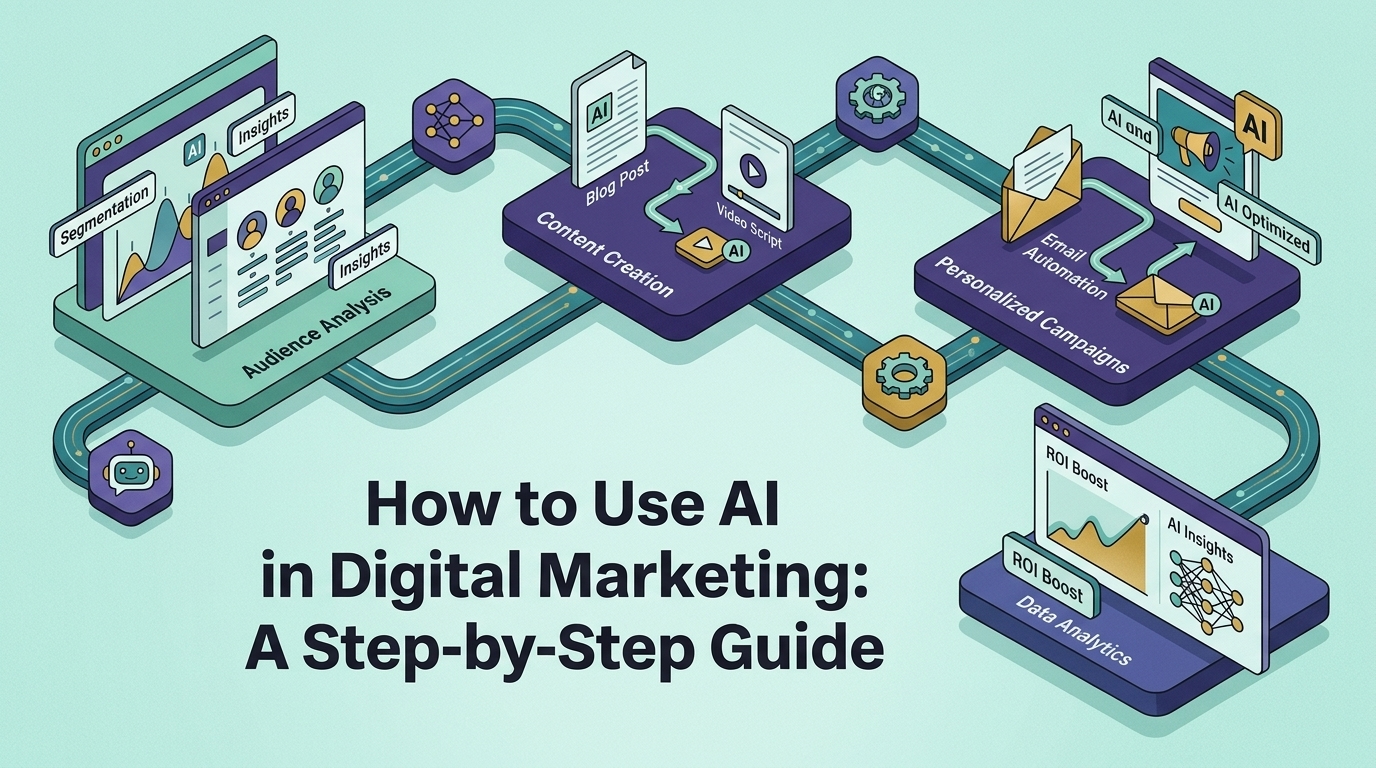
AI isn’t the future of digital marketing—it’s the present. By 2026, over 80% of marketers are using AI in some capacity, whether for content creation, customer insights, or ad optimization. Yet many still hesitate, unsure where to start or how to scale AI without disrupting their workflows.
The truth? AI isn’t just for tech giants with deep pockets. Tools like generative AI, predictive analytics, and automation platforms are now accessible to businesses of all sizes, offering ways to save time, reduce costs, and deliver more personalized experiences. The question isn’t if you should use AI in your marketing—it’s how to use it effectively.
This guide cuts through the hype to show you practical, low-risk ways to integrate AI into your digital marketing strategy. You’ll learn:
- Where AI fits into your marketing stack (and where it doesn’t)
- Step-by-step tactics for automation, personalization, and analytics
- Real-world examples of brands using AI to drive results
- How to avoid common pitfalls like over-automation or ethical missteps
By the end, you’ll have a clear action plan to test, scale, and future-proof your AI marketing efforts—without needing a data science degree.
Why AI is a Game-Changer for Digital Marketing
AI adoption in marketing isn’t slowing down. A 2025 survey found that 63% of marketers using AI reported a measurable increase in ROI, with the biggest gains coming from automation and personalization. Yet despite these results, many teams still treat AI as an optional add-on rather than a core strategy.
The Shift from Buzzword to Must-Have
Five years ago, AI in marketing was mostly limited to enterprise tools like IBM Watson or Salesforce Einstein. Today, even small businesses can access AI-powered platforms for:
- Content creation: Generating blog outlines, ad copy, or social media posts in seconds
- Customer insights: Predicting churn, segmenting audiences, or personalizing recommendations
- Ad optimization: Automating bids, targeting, and creative testing in real time
- Customer service: Handling FAQs, qualifying leads, or routing inquiries via chatbots
The result? Teams that embrace AI aren’t just working faster—they’re working smarter. For example, AI-driven A/B testing can reduce the time to find a winning ad variation from weeks to hours, while predictive analytics can identify high-value customers before they even convert.
Common Hesitations (and Why They’re Misplaced)
If you’re still on the fence about AI, you’re not alone. Here are the most frequent concerns—and why they shouldn’t hold you back:
-
"AI is too expensive."
- Reality: Many AI tools offer free tiers or affordable plans (e.g., Canva AI, Grammarly, or Google’s AI-powered ad tools). Start small with a single use case, then scale.
-
"AI will replace my job."
- Reality: AI augments human work, not replaces it. Marketers who use AI are more likely to focus on strategy, creativity, and high-value tasks—areas where humans still outperform machines.
-
"I don’t have the technical skills."
- Reality: Most AI marketing tools are designed for non-technical users. You don’t need to code; you just need to know what problems you’re solving.
-
"AI-generated content lacks authenticity."
- Reality: AI is a tool, not a replacement for human creativity. Use it to draft ideas, optimize copy, or personalize messages—then refine with your brand’s voice.
The bottom line? AI isn’t a silver bullet, but it’s no longer optional. Teams that ignore it risk falling behind competitors who are using AI to move faster, spend smarter, and connect more deeply with customers.
Core Applications of AI in Digital Marketing
AI isn’t a single tool—it’s a collection of technologies that can transform nearly every aspect of your marketing. Below, we’ll break down the four most impactful applications, with tactical examples for each.
1. Content Creation and Optimization
Creating high-quality content is time-consuming. AI can help at every stage, from ideation to optimization, while freeing up your team to focus on strategy and creativity.
How AI Enhances Content Workflows
TaskAI Tool ExampleHow It WorksBlog outlinesJasper, Copy.aiGenerates topic clusters, headings, and key points based on a promptAd copyPersado, PhraseeWrites and A/B tests ad variations for higher click-through ratesSEO optimizationSurferSEO, ClearscopeAnalyzes top-ranking content to suggest keywords, headings, and readability improvementsMeta descriptionsFrase, MarketMuseGenerates SEO-friendly meta descriptions at scaleSocial media postsCanva AI, LatelyRepurposes long-form content into platform-specific posts
AI for SEO: Beyond Keyword Research
SEO is one of the most data-heavy areas of marketing, making it a prime candidate for AI. Tools like SurferSEO or Clearscope use natural language processing (NLP) to:
- Identify content gaps: Compare your content against top-ranking pages to find missing subtopics.
- Optimize for intent: Analyze search intent (informational, commercial, navigational) and suggest content adjustments.
- Automate internal linking: Recommend relevant internal links to improve site structure and SEO.
Example: A SaaS company used SurferSEO to optimize a blog post about "project management tools." The AI tool identified missing subtopics (e.g., "best tools for remote teams") and suggested keyword placements. The result? A 40% increase in organic traffic within two months.
Ethical Considerations
While AI can speed up content creation, it’s not without risks:
- Plagiarism: Always run AI-generated content through tools like Copyscape or Originality.ai to ensure uniqueness.
- Brand voice: AI tools often produce generic copy. Train them on your brand guidelines (e.g., tone, style, key phrases) to maintain consistency.
- Over-optimization: Avoid stuffing AI-suggested keywords unnaturally. Prioritize readability and user experience.
2. Customer Insights and Personalization
Personalization isn’t new, but AI takes it to the next level by analyzing vast amounts of data in real time to deliver hyper-relevant experiences.
AI-Driven Audience Segmentation
Traditional segmentation relies on broad categories (e.g., age, location, past purchases). AI goes deeper by:
- Predictive segmentation: Identifying customers likely to churn, upsell, or respond to a specific offer.
- Behavioral clustering: Grouping users based on browsing behavior, engagement patterns, or micro-conversions (e.g., watching a product video).
- Dynamic lists: Automatically updating segments as customer behavior changes.
Tool spotlight: HubSpot’s AI-powered segmentation tool analyzes customer interactions (e.g., email opens, website visits) to create dynamic lists. For example, it can automatically segment users who abandoned their cart in the last 24 hours and trigger a personalized email.
Dynamic Content Personalization
AI enables real-time personalization across channels:
- Website: Tools like Dynamic Yield or Optimizely adjust content, offers, or CTAs based on user behavior.
- Email: Platforms like Iterable or Braze use AI to personalize subject lines, product recommendations, or send times.
- Ads: Facebook’s Advantage+ campaigns automatically tailor ad creative and targeting to individual users.
Case study: Stitch Fix, an online styling service, uses AI to personalize clothing recommendations for each customer. Their algorithm analyzes feedback, purchase history, and even social media activity to curate outfits. The result? A 30% higher retention rate compared to non-personalized recommendations.
Balancing Automation with Human Touch
Personalization works best when it feels authentic. Avoid:
- Over-segmentation: Don’t create so many segments that messages feel robotic.
- Ignoring context: AI can’t always account for external factors (e.g., a customer’s bad day). Use human oversight for sensitive communications.
- Lack of transparency: If you’re using AI to personalize content, consider disclosing it (e.g., "Recommended for you based on your browsing history").
3. Automation and Efficiency
Marketing teams spend up to 30% of their time on repetitive tasks like reporting, scheduling, or data entry. AI can automate these workflows, freeing up time for strategy and creativity.
Chatbots and Conversational AI
Chatbots are no longer just for FAQs. Modern AI-powered chatbots can:
- Qualify leads: Ask pre-defined questions to determine a lead’s fit and intent.
- Book meetings: Integrate with calendars to schedule demos or consultations.
- Provide 24/7 support: Handle common inquiries (e.g., order status, return policies) without human intervention.
Tool spotlight: Drift’s AI chatbot uses NLP to engage website visitors in real time. For example, if a visitor spends more than 30 seconds on a pricing page, the chatbot can proactively ask, "Have questions about our plans? I can help!" This approach has helped companies like Gong increase lead conversion rates by 20%.
Automating Repetitive Tasks
AI can handle time-consuming tasks across your marketing stack:
TaskAI Tool ExampleTime SavedSocial media schedulingHootsuite, Buffer5+ hours/weekReportingGoogle Data Studio, DashThis8+ hours/monthAd biddingGoogle Ads AI, Facebook Advantage+10+ hours/monthEmail workflowsHubSpot, ActiveCampaign6+ hours/week
Example: A mid-sized e-commerce brand used Zapier to automate their post-purchase email sequence. The AI tool triggered personalized thank-you emails, upsell offers, and review requests based on purchase history. The result? A 15% increase in repeat purchases and a 25% reduction in manual work.
When to Avoid Over-Automation
Automation is powerful, but it’s not a substitute for human judgment. Avoid:
- Over-automating customer interactions: Use chatbots for simple inquiries, but escalate complex issues to humans.
- Ignoring data quality: AI is only as good as the data it’s trained on. Clean and update your data regularly.
- Losing the personal touch: Automated emails should still feel human. Use merge tags, personalization tokens, and conversational language.
4. Advertising and Performance Marketing
AI is transforming advertising by making it faster, smarter, and more cost-effective. From programmatic ad buying to predictive analytics, AI helps marketers optimize spend and improve ROI.
Programmatic Ad Buying
Programmatic advertising uses AI to automate the buying and selling of ad space in real time. Benefits include:
- Real-time bidding (RTB): AI algorithms bid on ad inventory in milliseconds, ensuring you pay the optimal price.
- Dynamic creative optimization (DCO): AI tests and serves the best-performing ad variations (e.g., images, headlines, CTAs) for each user.
- Fraud detection: AI identifies and blocks invalid traffic (e.g., bots, click farms) to improve campaign accuracy.
Tool spotlight: Google’s Display & Video 360 uses AI to optimize ad placements across millions of websites. For example, it can automatically exclude low-performing sites and reallocate budget to high-converting placements.
Predictive Analytics for Ad Spend
AI-powered predictive analytics help marketers:
- Forecast ROI: Predict which campaigns will perform best based on historical data.
- Optimize budgets: Allocate spend to the highest-performing channels, audiences, or creatives.
- Identify trends: Spot emerging patterns (e.g., rising search terms, shifting audience preferences) before competitors.
Example: A DTC beauty brand used predictive analytics to identify that their Facebook ads performed best on weekdays between 6–9 PM. By reallocating 30% of their weekend budget to weeknights, they increased conversions by 22%.
Tools to Explore
Use CaseAI Tool ExampleProgrammatic adsGoogle Display & Video 360, The Trade DeskAd creative testingAdCreative.ai, PencilBid optimizationGoogle Ads AI, Facebook Advantage+Audience targetingAlbert, StackAdapt
How to Get Started with AI in Your Marketing Strategy
Ready to integrate AI into your marketing? Follow this five-step framework to pilot, scale, and optimize AI tools without disrupting your workflow.
Step 1: Audit Your Current Marketing Stack
Start by identifying pain points where AI can add value. Ask:
- Where are we spending the most time? (e.g., content creation, reporting, ad optimization)
- What tasks are repetitive or data-heavy? (e.g., A/B testing, lead scoring, customer segmentation)
- Where are we leaving money on the table? (e.g., low email open rates, high ad spend with low ROI)
Action item: List your top 3 time-consuming or low-performing tasks. These are your best candidates for AI automation.
Step 2: Choose the Right AI Tools for Your Needs
Not all AI tools are created equal. Use this checklist to evaluate options:
CriteriaQuestions to AskFeaturesDoes the tool solve a specific problem? (e.g., content generation, ad optimization)IntegrationsDoes it connect with your existing stack? (e.g., CRM, email platform, ad networks)ScalabilityCan it grow with your business? (e.g., handle larger datasets, more users)User reviewsWhat do other marketers say? (Check G2, Capterra, or Reddit)PricingIs it within budget? (Free tiers, pay-as-you-go, or enterprise plans)
Tool recommendations by budget:
- Free/low-cost: Canva AI (content), Grammarly (editing), Google Ads AI (ad optimization)
- Mid-range: Jasper (content), HubSpot (automation), Drift (chatbots)
- Enterprise: Salesforce Einstein (predictive analytics), Dynamic Yield (personalization)
Step 3: Pilot AI in Low-Risk, High-Impact Areas
Start small to minimize risk and build confidence. Here are three low-risk, high-impact use cases to test first:
-
Email subject line optimization
- Tool: Phrasee or Persado
- How to test: Run an A/B test with AI-generated subject lines vs. your current ones. Measure open rates.
- Success metric: 10%+ increase in open rates.
-
Chatbot for FAQs
- Tool: Drift or ManyChat
- How to test: Deploy a chatbot to answer common questions (e.g., shipping policies, return procedures).
- Success metric: 30%+ reduction in support tickets.
-
Ad creative testing
- Tool: AdCreative.ai or Google Ads AI
- How to test: Use AI to generate 3–5 ad variations and run them simultaneously.
- Success metric: 15%+ increase in CTR or conversions.
Pro tip: Document your hypothesis, test duration, and results. This will help you refine your approach and justify further investment.
Step 4: Scale and Integrate AI Across Your Funnel
Once you’ve validated AI in one area, expand it across your marketing funnel. Here’s how to align AI with each stage:
Funnel StageAI Use CaseExampleAwarenessContent creation, SEOUse SurferSEO to optimize blog posts for organic traffic.ConsiderationPersonalized recommendationsUse Dynamic Yield to show product recommendations based on browsing history.ConversionChatbots, ad optimizationUse Drift to qualify leads and Google Ads AI to optimize bids.RetentionPredictive analytics, email automationUse HubSpot to trigger personalized emails based on customer behavior.
Action item: Map your customer journey and identify one AI tool to implement at each stage.
Step 5: Address Ethical and Practical Challenges
AI isn’t without risks. Here’s how to navigate common challenges:
Data Privacy and Compliance
- GDPR/CCPA: Ensure your AI tools comply with data protection regulations. For example, avoid using AI to process sensitive customer data without consent.
- Transparency: Disclose when you’re using AI (e.g., "This email was personalized using AI").
- Data security: Choose tools with strong encryption and access controls.
Avoiding Over-Reliance on AI
- Human oversight: Always review AI-generated content, recommendations, or decisions. AI is a tool, not a replacement for judgment.
- Brand voice: Train AI tools on your brand guidelines to maintain consistency.
- Customer experience: Use AI to enhance, not replace, human interactions. For example, escalate complex support issues to a human agent.
Upskilling Your Team
AI adoption requires buy-in from your team. Here’s how to get them on board:
- Training: Offer courses on AI basics (e.g., Coursera’s "AI for Everyone" or HubSpot’s AI certification).
- Experimentation: Encourage team members to test AI tools in their workflows.
- Feedback loops: Create a channel (e.g., Slack, team meetings) to share AI successes and challenges.
Real-World Examples: How Brands Are Using AI in Marketing
Theory is great, but real-world examples show what’s possible. Here are three case studies of brands using AI to drive results.
Case Study 1: E-Commerce Brand Boosts Conversions with Dynamic Pricing
Company: A mid-sized online retailer selling home goods. Challenge: Struggling to compete with larger retailers on price while maintaining margins. Solution: Implemented an AI-powered dynamic pricing tool (RepricerExpress) to adjust prices in real time based on competitor pricing, demand, and inventory levels. Results:
- 20% increase in conversions
- 15% higher average order value
- 10% reduction in cart abandonment
Key takeaway: Dynamic pricing isn’t just for airlines or hotels. E-commerce brands of all sizes can use AI to stay competitive without sacrificing profitability.
Case Study 2: SaaS Company Automates Lead Qualification
Company: A B2B SaaS company offering project management software. Challenge: High volume of leads but low conversion rates due to manual qualification. Solution: Deployed an AI-powered chatbot (Drift) to engage website visitors, ask qualifying questions, and route high-intent leads to sales. Results:
- 35% increase in qualified leads
- 25% reduction in sales cycle time
- 15% higher close rates
Key takeaway: Chatbots aren’t just for customer service. They can also streamline lead generation and improve sales efficiency.
Case Study 3: Local Business Uses AI for Hyper-Local Ad Targeting
Company: A regional chain of fitness studios. Challenge: Struggling to compete with national chains for ad spend and local visibility. Solution: Used Facebook’s Advantage+ campaigns to automate ad targeting and creative testing. The AI tool optimized for local audiences, adjusting bids and creatives based on performance. Results:
- 40% lower cost per lead
- 25% higher attendance at free trial classes
- 15% increase in membership sign-ups
Key takeaway: AI levels the playing field for small businesses. Even with limited resources, you can compete with larger brands by leveraging automation and data.
The Future of AI in Digital Marketing
AI is evolving rapidly, and marketers who stay ahead of the curve will have a competitive edge. Here are three trends to watch in the coming years:
1. Generative AI for Video and Interactive Content
Generative AI is already transforming text and image creation, but video is next. Tools like Synthesia or Runway ML can:
- Generate video scripts from blog posts or product descriptions.
- Create synthetic avatars for personalized video messages (e.g., "Hi [First Name], here’s a demo of our new feature").
- Edit videos automatically (e.g., remove silences, add captions, or swap backgrounds).
Example: A real estate company used Synthesia to create personalized video tours for each property listing. The result? A 50% increase in inquiries from out-of-state buyers.
2. Voice Search Optimization
With the rise of smart speakers and voice assistants, voice search is becoming a critical channel. AI can help optimize for voice by:
- Analyzing natural language queries (e.g., "Where’s the nearest coffee shop?" vs. "coffee shop near me").
- Generating FAQ-style content that answers common voice queries.
- Optimizing for local search (e.g., "near me" queries, business hours, or directions).
Tool spotlight: AnswerThePublic or SEMrush’s voice search tool can identify common voice queries in your industry.
3. AI-Driven Influencer Marketing
Influencer marketing is notoriously difficult to scale. AI can help by:
- Identifying the right influencers based on audience demographics, engagement rates, and brand fit.
- Predicting campaign ROI by analyzing historical performance data.
- Automating outreach with personalized messages and contract templates.
Example: A fashion brand used an AI tool (Upfluence) to identify micro-influencers in their niche. The AI tool analyzed engagement rates and audience overlap to recommend the best-fit influencers. The result? A 30% higher ROI compared to manual influencer selection.
How to Future-Proof Your Strategy
AI isn’t a one-time project—it’s an ongoing journey. Here’s how to stay ahead:
- Experiment continuously: Test new tools and tactics regularly. What works today may not work tomorrow.
- Invest in learning: Follow industry blogs (e.g., HubSpot, Marketing AI Institute), attend webinars, or take courses on AI in marketing.
- Monitor ethical guidelines: Stay updated on regulations (e.g., GDPR, CCPA) and best practices for transparency and data privacy.
- Think long-term: Align AI initiatives with your broader business goals. For example, if your goal is to improve customer retention, focus on AI tools for personalization and predictive analytics.
Your AI-Powered Marketing Action Plan
AI in digital marketing isn’t about replacing humans—it’s about empowering them. By automating repetitive tasks, uncovering deeper insights, and delivering more personalized experiences, AI helps marketers work smarter, not harder.
Here’s your action plan to get started:
- Audit your marketing stack: Identify 1–2 pain points where AI can add value (e.g., content creation, ad optimization, customer service).
- Choose a tool: Select an AI tool that solves your specific problem (use the recommendations in this guide).
- Pilot and test: Run a small-scale experiment (e.g., AI-generated email subject lines or chatbot for FAQs).
- Measure and scale: Track KPIs (e.g., engagement rates, time saved, conversions) and expand AI to other areas of your funnel.
- Address challenges: Ensure data privacy, maintain human oversight, and upskill your team.
Next step: Pick one AI tool from this guide and sign up for a free trial. Test it for 30 days, then evaluate the results. Share your experience in the comments—what worked, what didn’t, and where you plan to go next.
AI isn’t the future. It’s here. The question is: Will you use it to your advantage?