Content Marketing for Startups: How to Build a Topic Cluster Strategy in 2026
 Thu Nghiem
Scattered blogging doesn’t work for startups in 2026. Learn how to build a topic cluster strategy to rank faster, drive organic traffic, and align content with your product—with real-world examples and a 30-day action plan.
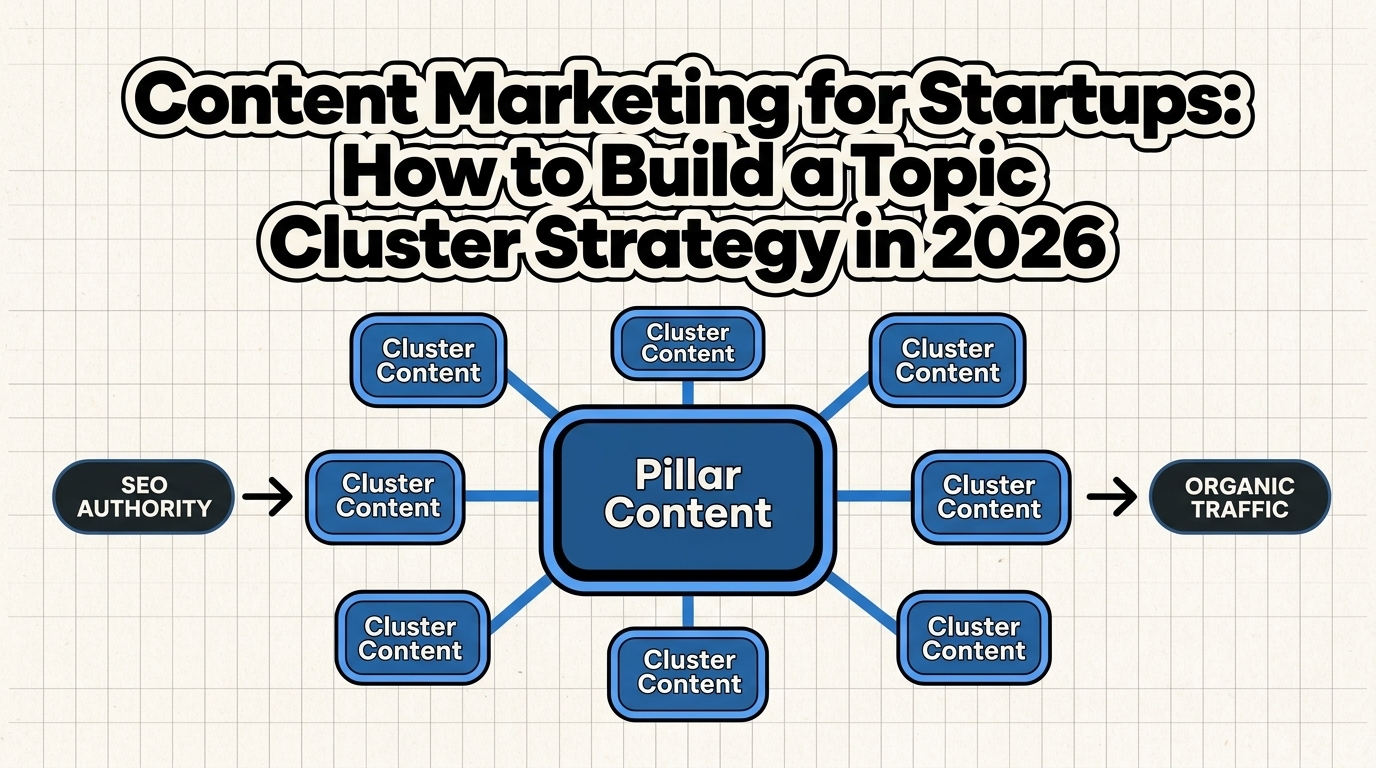
If you're a startup founder or early-stage marketer, you’ve likely heard this advice: "Just blog more." But after publishing a dozen posts with little traffic or leads, you’re left wondering—what’s the point?
Here’s the hard truth: Scattered blogging doesn’t work for startups in 2026. Google’s algorithms now prioritize topical authority—not just keywords—and users expect content that actually solves their problems. Meanwhile, your competitors are still churning out generic listicles, leaving a gap for you to own your niche.
The solution? A topic cluster strategy. It’s the most efficient way for startups to:
- Rank for competitive keywords (even with a small team).
- Build domain authority faster than established brands.
- Create a content ecosystem that drives organic traffic, leads, and product adoption.
In this guide, you’ll learn how to build your first topic cluster—step by step—with startup-friendly shortcuts, real-world examples, and a 30-day action plan.
Why Startups Need a Topic Cluster Strategy in 2026
The Problem with Traditional Blogging
Most startups fall into the same trap: publishing random blog posts based on gut feelings or trends. The result?
- Scattered content: Posts that don’t connect or reinforce each other.
- Low SEO impact: No topical authority = no rankings for competitive keywords.
- Poor conversion: Traffic that doesn’t align with your product or sales funnel.
In 2026, this approach is a dead end. Google’s algorithms now reward comprehensive coverage of a topic—not just individual posts. If you’re not organizing your content strategically, you’re leaving organic traffic (and revenue) on the table.
Why Topic Clusters Work for Startups
Topic clusters solve three critical problems for early-stage companies:
-
SEO Efficiency
- Instead of competing for single keywords, you own a topic by covering it from every angle.
- Example: A fintech startup could build a cluster around "automated invoicing" with subtopics like "best tools for freelancers," "how to reduce late payments," and "ROI calculator."
-
Scalability
- Clusters let you repurpose existing content (e.g., customer FAQs, sales enablement docs) into pillar pages and subtopics.
- Example: A SaaS startup could turn its "onboarding checklist" into a pillar page, then create cluster content around "tools," "metrics," and "case studies."
-
Product-Led Growth
- Clusters align content with your product’s core value proposition.
- Example: A project management tool could build a cluster around "remote team collaboration," with subtopics that naturally lead to sign-ups (e.g., "best tools for async work").
The 2026 Advantage: Agility Over Authority
Established brands have one major weakness: bureaucracy. They move slowly, overthink content, and struggle to adapt to new trends.
Startups? You’re built for speed. You can:
- Launch clusters faster (no approval chains or legacy content to work around).
- Test and iterate (use data to double down on what works).
- Own niches (target high-intent, low-competition subtopics before competitors catch on).
What Is a Topic Cluster (and How It Works for Startups)
The Basics: Pillar + Cluster + Internal Links
A topic cluster is a content structure built around three elements:
-
Pillar Content
- A comprehensive guide (1,500–3,000 words) that covers a broad topic.
- Example: "The Ultimate Guide to AI for Small Businesses."
-
Cluster Content
- Supporting content (blog posts, templates, videos) that dives deeper into subtopics.
- Example: "Best AI Tools for E-Commerce in 2026," "How to Calculate AI ROI for Your Business."
-
Internal Linking
- Links that connect pillar and cluster content, signaling to Google that your site is an authority on the topic.
Here’s how it looks in practice:
Pillar: "SaaS Onboarding Best Practices"
├── Cluster: "Onboarding Checklists for Startups"
├── Cluster: "Best Onboarding Tools for 2026"
├── Cluster: "How to Measure Onboarding Success"
└── Cluster: "Case Study: How [Startup] Reduced Churn by 40%"
Why This Works for Startups
-
SEO Benefits
- Improved crawlability: Google’s bots can easily navigate your content.
- Higher rankings: Pillar pages rank for broad keywords; cluster pages rank for long-tail queries.
- Longer dwell time: Users stay on your site longer (a key ranking factor).
-
Startup-Friendly Twists
- Focus on high-intent, low-competition subtopics (e.g., "best [tool] for [specific use case]").
- Repurpose existing content (e.g., turn customer FAQs into cluster posts).
- Mix content types (e.g., templates, calculators, or videos to stand out).
Step-by-Step: How to Build Your First Topic Cluster
Step 1: Choose a Pillar Topic
Criteria:
- Aligns with your product’s core value proposition.
- Has search volume (use tools like Ahrefs or SEMrush to validate).
- Covers a broad problem your audience cares about.
Tools to Use:
- Ahrefs/SEMrush: Check keyword difficulty and search volume.
- Google Search Console: Identify existing content that could become a pillar.
- Customer Interviews: Ask your audience, "What’s your biggest challenge with [topic]?"
Startup Hack:
- Repurpose existing content (e.g., turn a high-performing blog post into a pillar page).
- Look at sales enablement docs (e.g., FAQs, battle cards) for pillar ideas.
Example Pillar Topics:
IndustryPillar Topic ExampleSaaS"How to Reduce Customer Churn"E-Commerce"The Ultimate Guide to Dropshipping in 2026"Fintech"Automated Invoicing: Tools and Best Practices"
Step 2: Map Cluster Content
Brainstorm Subtopics:
- Keyword Research: Use tools to find related queries (e.g., "how to [solve X problem]").
- Competitor Gaps: Look at what competitors aren’t covering.
- Customer Questions: Mine support tickets, reviews, and social media.
Prioritize Subtopics:
- Start with "low-hanging fruit" (low difficulty, high intent) to build quick wins.
- Example: For a pillar on "AI for small businesses," prioritize:
- "Best AI Tools for [Industry]" (high intent).
- "AI ROI Calculator" (interactive = higher engagement).
- "Case Studies: How Small Businesses Use AI" (social proof).
Example Cluster Map:
Pillar: "AI for Small Businesses"
├── Cluster: "Best AI Tools for E-Commerce in 2026"
├── Cluster: "How to Calculate AI ROI for Your Business"
├── Cluster: "Case Study: How a Local Retailer Used AI to Increase Sales"
└── Cluster: "AI vs. Traditional Marketing: Which Wins?"
Step 3: Create and Link Content
Internal Linking Best Practices:
- Use keyword variations for anchor text (e.g., "learn more about AI tools" instead of "click here").
- Link from cluster to pillar and from pillar to cluster to reinforce topical authority.
- Avoid orphaned pages (cluster content with no internal links = wasted effort).
Content Types to Mix In:
| Content Type | Example | Why It Works |
|---|---|---|
| Blog Posts | "Best AI Tools for E-Commerce" | SEO-friendly, easy to produce |
| Templates | "AI ROI Calculator" | High perceived value = more shares |
| Videos | "How to Set Up AI for Your Business" | Higher engagement = longer dwell time |
| Case Studies | "How [Startup] Used AI to Grow Revenue" | Social proof = more conversions |
Startup Shortcut:
- Outsource cluster content to freelancers (e.g., Upwork, Fiverr) or use AI tools (e.g., Jasper, Copy.ai) for first drafts.
- Repurpose existing assets (e.g., turn a webinar into a blog post + video).
Step 4: Measure and Optimize
KPIs to Track:
| Topic | Detail |
|---|---|
| Organic Traffic | Google Search Console - Are your pillar/cluster pages ranking? |
| Keyword Rankings | Ahrefs/SEMrush - Are you moving up for target keywords? |
| Backlinks | Ahrefs - Is your content earning authority? |
| Conversion Rates | Google Analytics - Is traffic turning into leads/sign-ups? |
Optimization Tips:
- Update clusters quarterly (add new subtopics, refresh outdated content).
- Double down on what works (e.g., if "AI ROI Calculator" drives traffic, create more interactive tools).
- Prune underperforming content (e.g., cluster posts with no traffic after 6 months).
Startup Success Stories: Topic Clusters in Action
Case Study 1: SaaS Startup (0→10K MRR in 6 Months)
The Challenge:
- A project management tool struggled to rank for "best project management software" (high competition).
- Their blog had scattered posts with no topical authority.
The Solution:
- Built a pillar page: "The Ultimate Guide to Remote Team Collaboration."
- Created cluster content around subtopics like:
- "Best Tools for Async Work"
- "How to Run Effective Virtual Meetings"
- "Case Study: How [Startup] Improved Productivity by 30%"
The Results:
- Organic traffic increased by 200% in 3 months.
- The pillar page ranked on page 1 for "remote team collaboration" (a high-intent keyword).
- Lead generation improved by 40% (visitors who read the pillar + cluster content were more likely to sign up).
Key Takeaway:
- Hyper-specific clusters (e.g., "best tools for async work") outperformed generic topics.
- Repurposing content (e.g., turning a webinar into a blog post + video) saved time.
Case Study 2: B2B Marketplace (30% Lower CAC)
The Challenge:
- A marketplace for freelance designers had high customer acquisition costs (CAC).
- Their blog focused on generic topics like "how to hire a designer" (low intent).
The Solution:
- Built a pillar page: "The Ultimate Guide to Hiring Freelance Designers in 2026."
- Created cluster content around subtopics like:
- "Best Platforms for Hiring Freelance Designers"
- "How to Write a Design Brief That Gets Results"
- "Case Study: How [Startup] Saved $10K on Design Costs"
The Results:
- Organic traffic increased by 150% in 4 months.
- The pillar page ranked on page 1 for "hire freelance designers" (a high-commercial-intent keyword).
- CAC decreased by 30% (visitors who read the pillar + cluster content were more likely to convert).
Key Takeaway:
- High-intent subtopics (e.g., "best platforms for hiring designers") drove more qualified leads.
- Internal linking (from cluster to pillar) improved rankings and user engagement.
Common Mistakes (and How to Avoid Them)
Mistake 1: Choosing a Pillar Topic That’s Too Broad or Too Narrow
Problem:
- Too broad (e.g., "marketing") = impossible to cover comprehensively.
- Too narrow (e.g., "best font for landing pages") = no search volume.
Solution:
- Aim for "Goldilocks topics"—broad enough to have search volume, but specific enough to own.
- Example: Instead of "marketing," try "content marketing for startups."
Mistake 2: Ignoring Internal Linking
Problem:
- Cluster pages with no internal links = orphaned content (Google won’t rank them).
Solution:
- Link from cluster to pillar and from pillar to cluster (use keyword variations for anchor text).
- Example: In a cluster post about "best AI tools for e-commerce," link to the pillar page with anchor text like "learn more about AI for small businesses."
Mistake 3: Not Updating Clusters
Problem:
- Stale content = lost rankings (Google prioritizes fresh content).
Solution:
- Audit clusters quarterly (add new subtopics, refresh outdated content).
- Prune underperforming content (e.g., cluster posts with no traffic after 6 months).
Mistake 4: Over-Optimizing for SEO
Problem:
- Keyword stuffing = poor user experience (Google penalizes it).
Solution:
- Prioritize user value (write for humans, not algorithms).
- Example: Instead of "best AI tools for small businesses in 2026," try "AI tools that actually save small businesses time and money."
Next Steps: Launch Your Topic Cluster in 30 Days
Quick-Start Checklist
- Step 1: Choose a pillar topic and map 3 cluster subtopics.
- Step 2: Draft the pillar page (use a template to speed up the process).
- Step 3: Draft cluster content (outsource or use AI tools for first drafts).
- Step 4: Publish pillar and cluster content, then link them together.
Tools and Resources
| Topic | Detail |
|---|---|
| Keyword Research | Ahrefs, SEMrush, Google Keyword Planner |
| Content Briefs | Notion, Trello, or Google Docs templates |
| Writing | Jasper, Copy.ai (for first drafts), Grammarly |
| Tracking | Google Search Console, Ahrefs, HubSpot |
| Internal Linking | Screaming Frog (for auditing), LinkWhisper |
Free Templates
- Content Brief Template (Google Docs)
- Keyword Tracker (Google Sheets)
- Topic Cluster Map (Notion)
Your Turn: Build a Topic Cluster That Drives Growth
Topic clusters aren’t just an SEO tactic—they’re a growth engine for startups. By organizing your content strategically, you’ll:
- Rank for competitive keywords (even with a small team).
- Build domain authority faster than established brands.
- Create a content ecosystem that drives organic traffic, leads, and product adoption.
Next step: Audit your existing content. What pillar topics could you build around? What cluster subtopics are your audience searching for?
Start small, test fast, and double down on what works. In 30 days, you could have your first topic cluster live—and a scalable content strategy to fuel your startup’s growth.