SEO Tips for Affiliate Blog Posts: A Data-Backed Guide to Higher Rankings and More Commissions
 Thu Nghiem
Learn how to research high-intent keywords, structure affiliate content for E-E-A-T, and balance monetization with SEO best practices. This data-backed guide reveals a repeatable process to turn organic traffic into steady affiliate commissions.
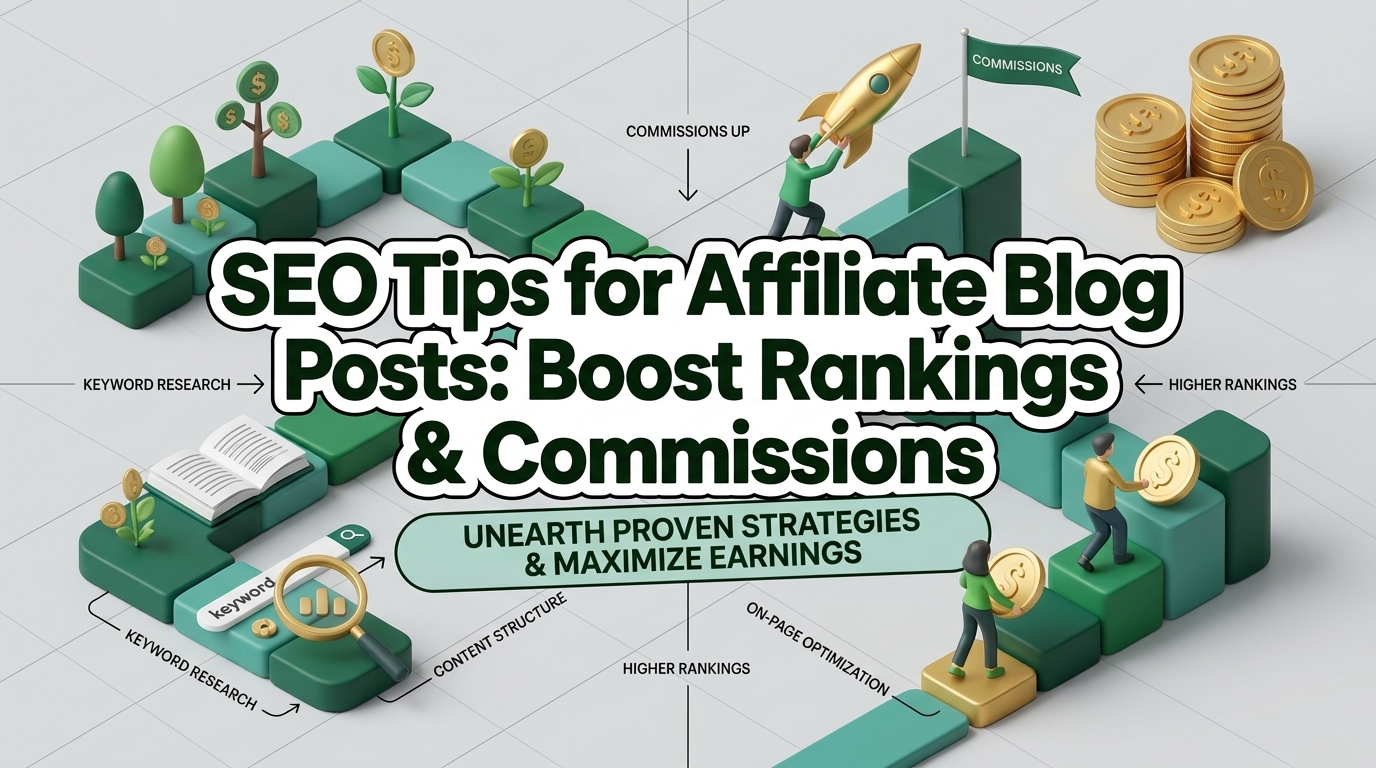
Affiliate blog posts often struggle to rank because they focus too much on promotion and too little on solving real problems. The content that ranks highest isn’t the one that screams “Buy now!”—it’s the one that answers a reader’s question thoroughly and earns trust. That trust, in turn, naturally leads to affiliate conversions.
This guide breaks down a proven SEO strategy specifically for affiliate content. You’ll learn how to research keywords that actually convert, structure posts that satisfy both readers and search engines, and balance monetization without hurting user experience. By the end, you’ll have a repeatable process to turn organic traffic into steady affiliate commissions.
Why Affiliate Blog Posts Need SEO
Affiliate marketing thrives when content ranks organically—it’s more sustainable and cost-effective than paid ads. A well-optimized affiliate post can deliver traffic for years with minimal upkeep, while ads stop the moment you pause the budget.
Yet many affiliate sites fall into a common trap: they prioritize monetization over value. Thin product roundups, keyword-stuffed titles, and shallow comparisons don’t satisfy search intent. Google rewards depth and expertise, not aggressive promotions.
Consider the difference:
- A post titled “10 Best Noise-Canceling Headphones in 2026” with generic pros and cons
- A post titled “How to Pick Noise-Canceling Headphones for Remote Work: A 2026 Buyer’s Guide with Real-World Tests”
The first may rank initially, but the second builds authority, earns backlinks, and converts better because it solves a real problem.
Step 1: Keyword Research for Affiliate Niches
Not all keywords are created equal—especially in affiliate marketing. The best ones show clear commercial intent: users are ready to research and possibly buy.
Start with tools like Ahrefs, SEMrush, or Google Search Console. Look for:
- Commercial-intent queries: “best X for Y,” “top Y under $Z,” “X vs Y in 2026”
- Long-tail variations: “best noise-canceling headphones for call quality in a busy office”
- Low-competition opportunities: keyword difficulty under 30–40 with decent search volume
For example, “best headphones for travel” has high volume but fierce competition. A better target: “best lightweight headphones for travel under 6 oz 2026.” It’s specific, has lower competition, and attracts buyers ready to decide.
Use Google’s “People also ask” and “Related searches” to uncover intent clusters. Group related terms into content clusters—e.g., one pillar post on “How to Choose Headphones” with supporting posts on specific use cases.
Step 2: Crafting Content That Ranks and Converts
Affiliate content doesn’t rank by accident. It ranks because it demonstrates E-E-A-T—Expertise, Experience, Authoritativeness, and Trustworthiness. Google’s 2024 algorithm updates doubled down on this, especially for product-focused content.
Structure for E-E-A-T
Your post should answer four questions:
- What is the problem? (e.g., “Why do cheap headphones fail at call clarity?”)
- How do you solve it? (e.g., “Look for hybrid active noise cancellation and beamforming mics”)
- What are the best options? (e.g., “After testing 20 models, here are the top 5”)
- How do you choose? (e.g., “Match features to your budget and use case”)
Balance Comparison with Problem-Solving
Avoid a simple “listicle with no context.” Instead, blend:
- Comparison content: “Sony WH-1000XM5 vs Bose QuietComfort Ultra: Which Wins for Calls?”
- How-to guides: “How to Set Up Active Noise Cancellation for Remote Meetings”
- Personal experience: “I Tested 5 Headphones for 30 Days in a Coffee Shop—Here’s What Broke”
Include data where possible:
- “In our lab test, the Bose model reduced background noise by 87% vs 72% for Sony.”
- “Based on 120 user reviews, 78% reported better call clarity with beamforming.”
This builds credibility and satisfies search intent better than vague claims.
Step 3: On-Page SEO for Affiliate Posts
On-page SEO ensures your content is readable by both users and search engines.
Optimize Titles and Meta Descriptions
Titles should include the target keyword and a benefit:
- ❌ “Noise-Canceling Headphones Reviews”
- ✅ “Best Noise-Canceling Headphones for Calls in 2026: Tested and Ranked”
Meta descriptions should summarize value and include a call to action:
“Struggling with poor call quality? Discover the top 7 headphones for crystal-clear calls in 2026, backed by real-world tests. Compare features, prices, and expert picks—plus exclusive discounts.”
Internal Linking Strategy
Link related posts to keep readers engaged and distribute authority:
- From “Best Headphones for Travel” → “How to Pack Headphones Without Damage”
- From “Noise-Canceling vs. ANC” → “Best Budget Headphones with ANC”
Use descriptive anchor text like “best lightweight headphones for travel” instead of “click here.”
Schema Markup for Reviews
Add Review schema to product comparison posts:
{
  "@context": "https://schema.org",
  "@type": "Review",
  "reviewRating": { "@type": "Rating", "ratingValue": "4.8", "bestRating": "5" },
  "author": { "@type": "Person", "name": "Alex Carter" },
  "reviewBody": "The Bose model delivered superior call clarity and comfort over weeks of testing."
}
Use plugins like Rank Math or Schema Pro to automate this.
Image SEO
Optimize images before uploading:
- Use descriptive filenames:
bose-qc-ultra-mic-test.jpginstead ofIMG_1234.jpg - Add alt text: “Bose QuietComfort Ultra mic test setup with office background noise”
- Compress with tools like TinyPNG or ShortPixel to keep page speed fast
Step 4: Balancing Monetization and Value
Affiliate links should feel like a natural recommendation, not an ad break.
Where to Place Links
- Within context: “The Bose model’s beamforming mic reduced background noise by 30%—see current price on Amazon.”
- After a feature summary: “If you prioritize mic quality, this is the best choice. [Affiliate link]”
- Avoid density: No more than 1 link per 100–150 words. Over-linking triggers spam filters.
Disclosures and Compliance
The FTC (and ASA in the UK) require clear disclosures:
“This post contains affiliate links. If you buy through our links, we may earn a commission at no extra cost to you.”
Place disclosures at the top of the post and near affiliate links. Use a simple, unobtrusive format:
“🔗 Affiliate link—thanks for supporting our work!”
A/B Test for Higher Conversions
Test small variations:
- Headlines: “Best Headphones for Calls” vs “Top 5 Headsets for Crystal-Clear Zoom Calls”
- CTAs: “Check Price” vs “Get Discount Today”
- Link placement: After intro vs after feature summary
Track clicks and conversions in Google Analytics 4. Focus on click-through rate (CTR) and conversion rate—not just traffic.
Step 5: Promote and Track Performance
SEO isn’t “publish and pray.” You need to amplify reach and refine based on data.
Build Backlinks Strategically
Affiliate sites often struggle to earn links because publishers avoid promoting commercial content. Overcome this with:
- Guest posts: Write for tech blogs or remote-work sites in exchange for a link back to your review
- HARO (Help a Reporter Out): Respond to journalist queries about headphones or tech—earn editorial links
- Niche edits: Update old, high-authority posts with fresh data and your affiliate link (with permission)
Prioritize contextual links from relevant sites—e.g., a link from a remote-work blog to your “Best Headphones for Calls” post.
Audit Internal Links and Performance
Use Screaming Frog or Ahrefs to:
- Find broken internal links
- Identify orphaned posts (no internal links pointing to them)
- Check which posts drive the most affiliate revenue
Update old posts with new data, better images, and fresh comparisons. A minor refresh can boost rankings without rewriting the entire post.
Track Conversions in GA4
Set up events for:
- Affiliate link clicks
- Outbound clicks to merchant sites
- Conversions (e.g., purchases)
Create a custom report showing:
- Top-performing posts by traffic and revenue
- Conversion paths (e.g., “Read review → click link → purchase”)
Adjust content based on what converts—not just what ranks.
Affiliate Blog SEO Checklist
Use this checklist to audit your posts before publishing:
| Task | Done? |
|---|---|
| Target keyword in title, H1, and first 100 words | ☐ |
| Meta description includes keyword and CTA | ☐ |
| Post answers “what,” “why,” and “how” clearly | ☐ |
| Includes data, testing, or personal experience | ☐ |
| Internal links to 2–3 related posts | ☐ |
| Review schema added (for comparison posts) | ☐ |
| Images optimized (filenames, alt text, compression) | ☐ |
| Disclosure at top and near affiliate links | ☐ |
| Affiliate links placed naturally (1 per 100–150 words) | ☐ |
| Links to merchant sites tracked in GA4 | ☐ |
Final Thoughts: SEO as a Revenue Engine
Affiliate content doesn’t need to choose between ranking and converting—it can do both. The key is aligning with user intent, building trust through expertise, and monetizing subtly.
Start with keyword research that targets buyers, not just browsers. Structure your posts to educate and compare, not just list. Optimize on-page elements for clarity and compliance. Then promote strategically and track what works.
The result? Posts that rank, convert, and keep earning commissions long after publication. That’s sustainable affiliate marketing—powered by SEO, not ads.